Warabeya Nichiyo Foods Co., Ltd., serves as a member of Nihon Delica Foods Association (NDF), an organization composed of multiple companies that have business dealings with SEVEN-ELEVEN JAPAN CO., LTD. Together, members engage in ingredient procurement, product development, production and quality control, and environmental action. In addition to developing attractive products, we also take part in a variety of environmentally-friendly initiatives.
In terms of reducing food waste and loss, we participate in the NDF Food Loss Working Group.
Analyzing the content of food waste at plants has revealed that a high percentage of excess work in process* is discarded because plants produce more than the amount ordered. One of the reasons for this overproduction is that companies have started to manufacture products based on order forecasting. We requested SEVEN-ELEVEN JAPAN CO., LTD., to change its ordering system in aims of improving the accuracy of order forecasting, resulting in gradually producing results. The modifications we have made to our production structure in order to accommodate the changes in their ordering system have also led to higher productivity.
As part of this project, we will continue to take various steps to reduce food waste and loss.
*Work in process: A product that is in the process of being manufactured.
We recognize that reducing industrial waste (plastic waste) is an important global challenge, as well as an item that is directly linked to management in terms of soaring disposal costs, for example.
Since 2019, when Warabeya Nichiyo Foods Co., Ltd. began its Eco Action 21 initiatives, we have been working to reduce industrial waste (plastic waste) by reviewing the size and usage of plastic sheets used at our plants, as well as by improving treatment methods such as the separation and cleaning of plastic waste. As a result, industrial waste (plastic waste) decreased from 2024 to 2025.
With regard to animal and plant residues, we are also reviewing ordering methods and production processes to prevent unnecessary waste generation. Through these initiatives, reductions in animal and plant residues have been progressing during the same period.
Changes in Waste Amounts
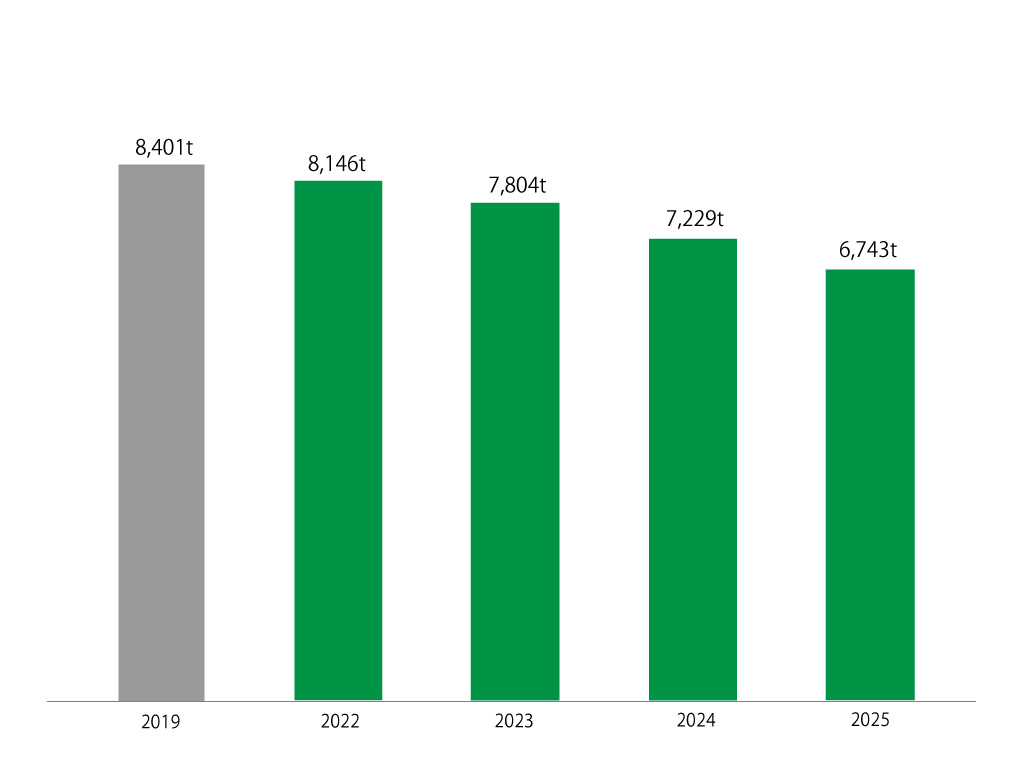
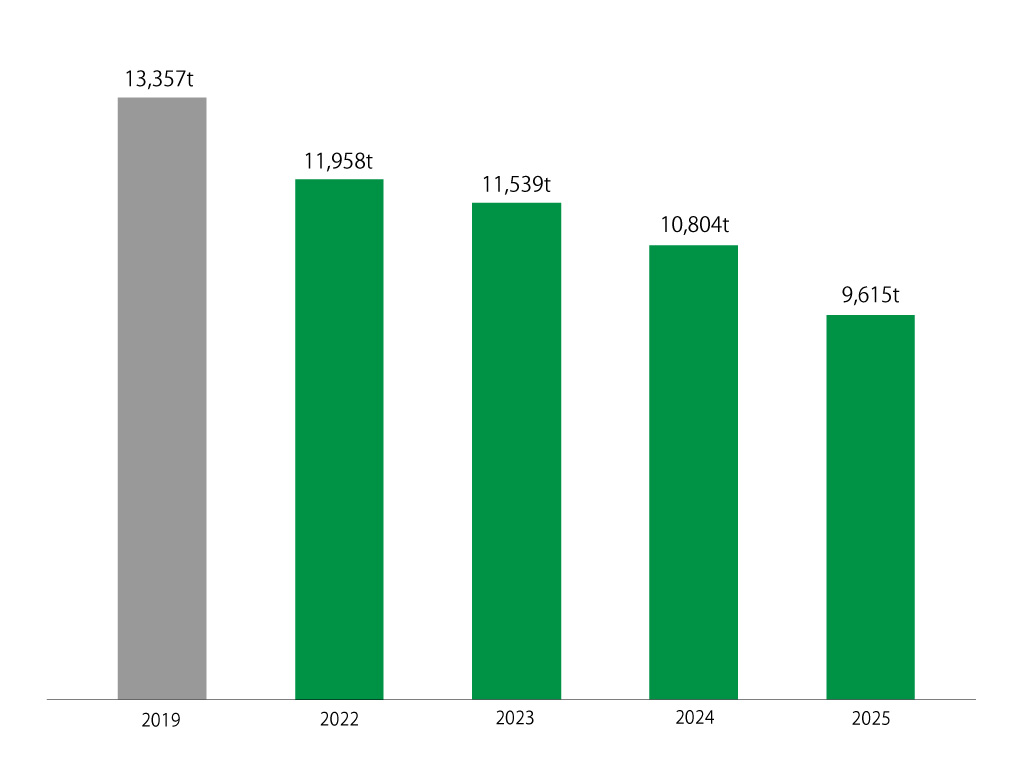
* From fiscal year 2024, the data collection period was changed from April–March to March–February to align with the accounting period.
.svg)